Isnonuegerbene
isnonuegerbene.sbs
The Carver's Gazette
Celebrating the craft of hand-carved linoleum printing
From factory floors to studio tables — how a humble material became a beloved medium for makers everywhere
Isnonuegerbene
Once cut into the floors of German factories, linoleum found an unlikely second life
in the hands of artists and hobbyists who saw potential where others saw practical
flooring. We built Isnonuegerbene because we believe this craft — patient, tactile, deeply
satisfying — deserves a home for those who are just discovering it. Here, carving is
not a lost art. It is a living one, practiced on kitchen tables and in garden sheds
across Australia and beyond. We share what we know honestly, including what you will
need to figure out for yourself.
Explore our guides"The gouge meets the block and something ancient happens — a mark made by hand, transferred by pressure, kept forever on paper."
What we stand for as a craft community
Our mission as craft guides
Before mass production made art feel distant, people made things with their hands as a matter of course. Our mission is to bring that instinct back — not as nostalgia, but as a practical, affordable creative practice. We document the techniques, curate the tools worth buying, and build the kind of honest resource we wished had existed when we first picked up a gouge. Every guide we write is tested at the block, not assembled from theory.
A craft that endures
We see a future where linocut is as familiar a hobby as watercolour painting or pottery — approachable for a beginner, endlessly deep for someone who has been carving for years. That future is built one print at a time, shared between makers who are generous with what they know. We are here to be part of that long, slow, satisfying arc.
Patience as a creative virtue
Linocut does not reward rushing. Each carved line requires attention, each inked impression requires care. We write and share with that same unhurried intention — preferring clarity over speed and depth over volume.
Honesty about cost and effort
We are straightforward about what this craft demands: time, a small investment in decent tools, and the willingness to produce imperfect prints before producing good ones. No shortcuts are promised here, only honest guidance.
Sustainability in materials and practice
Linoleum is a natural material — linseed oil, cork dust, and jute backing. Water-based inks keep your workspace clean and your environmental footprint modest. We favour approaches that are kind to the planet as well as to your budget.
Inclusivity across skill and background
You do not need an art degree or a dedicated studio to carve a linoblock. You need curiosity and a flat surface. We write for beginners without condescending to experienced makers, and we celebrate prints at every level of refinement.
A brief history of linocut
From industrial flooring to fine art studios and back to the kitchen table
1890s
Linoleum invented as practical flooring material
Frederick Walton's patented flooring compound — linseed oil pressed onto jute backing — was designed for Victorian hallways, not artist studios. Durable, washable, and cheap, it spread across homes and factories before anyone thought to pick up a gouge and carve into its smooth surface.
Origins
Materials
Victorian era
1905
Artists begin carving blocks for printmaking
German Expressionist printmakers, frustrated by the grain constraints of woodblock, discovered that linoleum's smooth, uniform surface accepted a gouge in any direction without resistance. That freedom — to cut curves, fine details, and bold shapes with equal ease — made linocut a medium in its own right, not merely a substitute.
Expressionism
Technique
1939
Picasso adopts the reduction linocut method
Pablo Picasso's sustained engagement with linocut — particularly his development of the reduction method, where a single block is carved and printed in successive layers — brought international attention to the medium. His prints demonstrated that linoleum was not a beginner's shortcut but a vehicle for genuine artistic complexity.
Fine Art
Innovation
1960s
Linocut enters schools and community studios
As art education expanded in the postwar decades, linocut became a staple of classroom printmaking. Its low cost, forgiving surface, and immediate results made it ideal for teaching. An entire generation of makers cut their first block in a school art room, many returning to the craft decades later.
Education
Community
2010s
The craft revival reaches a new generation of hobbyists
Online communities, craft fairs, and social media brought linocut back into homes across the world. Hobbyists in Australia and beyond discovered that a starter kit, a kitchen table, and a free afternoon were all that was needed to begin. Isnonuegerbene was born from exactly that spirit — affordable, hands-on, and shared with generosity.
Revival
Hobbyist
Digital era
Centuries of craft, distilled
Our core team
The people behind the block
A small team of dedicated makers who carve, print, and share what they learn along the way
Isnonuegerbene is run by people who came to linocut the same way most of our readers do — curious, slightly intimidated, and armed with a beginner's kit purchased on a modest budget. What follows is who we are.
We are a lean team, not a large institution. What we lack in size we make up for in genuine enthusiasm for the craft.

Margot Ellery
Founder and Lead Carver
Margot carved her first block on a rainy weekend and never really stopped. She runs the site and writes most of the technique guides.
Margot discovered linocut through a community art fair and built Isnonuegerbene to share the techniques she had to piece together from scattered sources. Her prints lean toward botanical motifs and bold, minimal compositions.
"Every imperfect print taught me something the good ones never did."
Block carving
Relief printing
Tool selection
+1
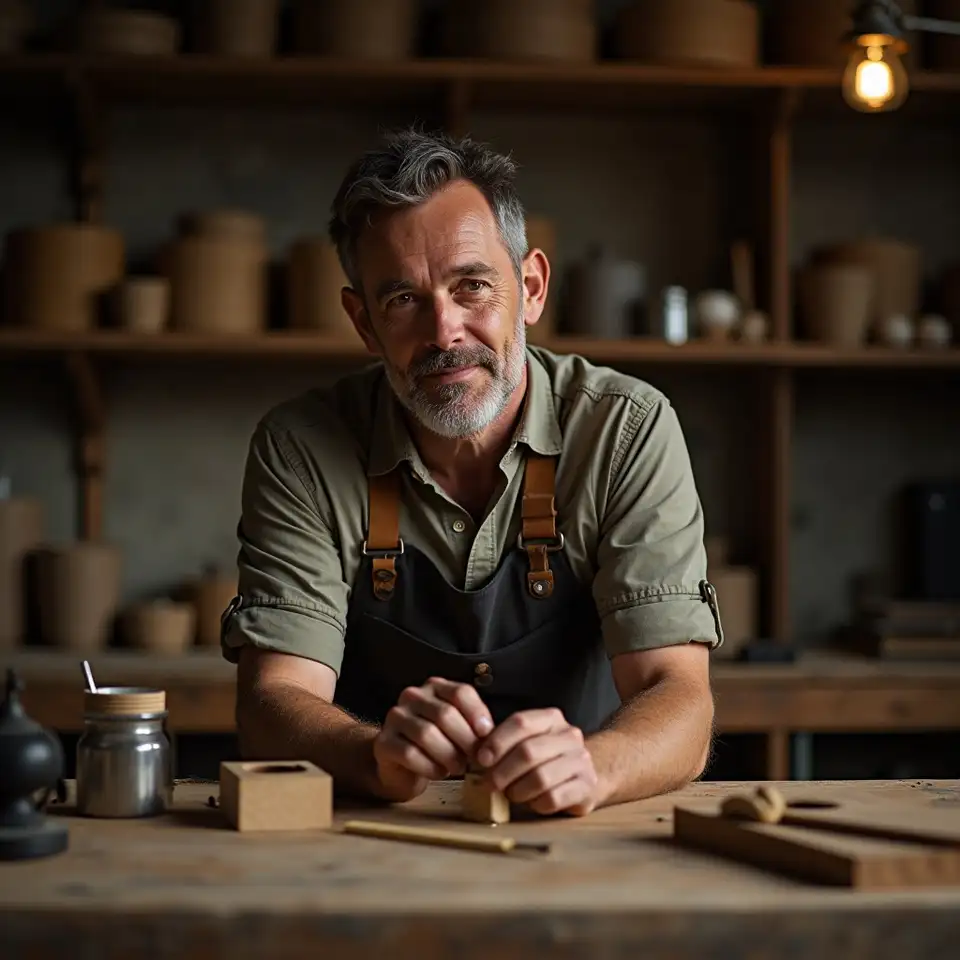
Callum Bright
Materials and Tools Reviewer
Callum tests every tool and ink brand before recommending it, with a particular focus on value for the budget-conscious maker.
A former cabinet maker who came to printmaking sideways, Callum brings a craftsman's eye to the question of which tools are worth buying and which are best avoided. He writes the gear reviews and maintains the materials guide.
"A sharp gouge is a better teacher than any written guide, including mine."
Tool testing
Material sourcing
Woodworking

Priya Sundaram
Fabric Printing Contributor
Priya specialises in transferring linocut designs onto fabric and writes the textile printing section of the site.
Priya has spent years adapting linocut techniques for use on cotton and linen, developing a practical method for hobbyists who want to move beyond paper. She contributes detailed guides on fabric preparation, ink selection, and heat-setting.
"Paper is forgiving. Fabric teaches you to commit to every mark."
Fabric printing
Textile inks
Pattern design
+1
Every guide we publish is tested at the block before it reaches you.
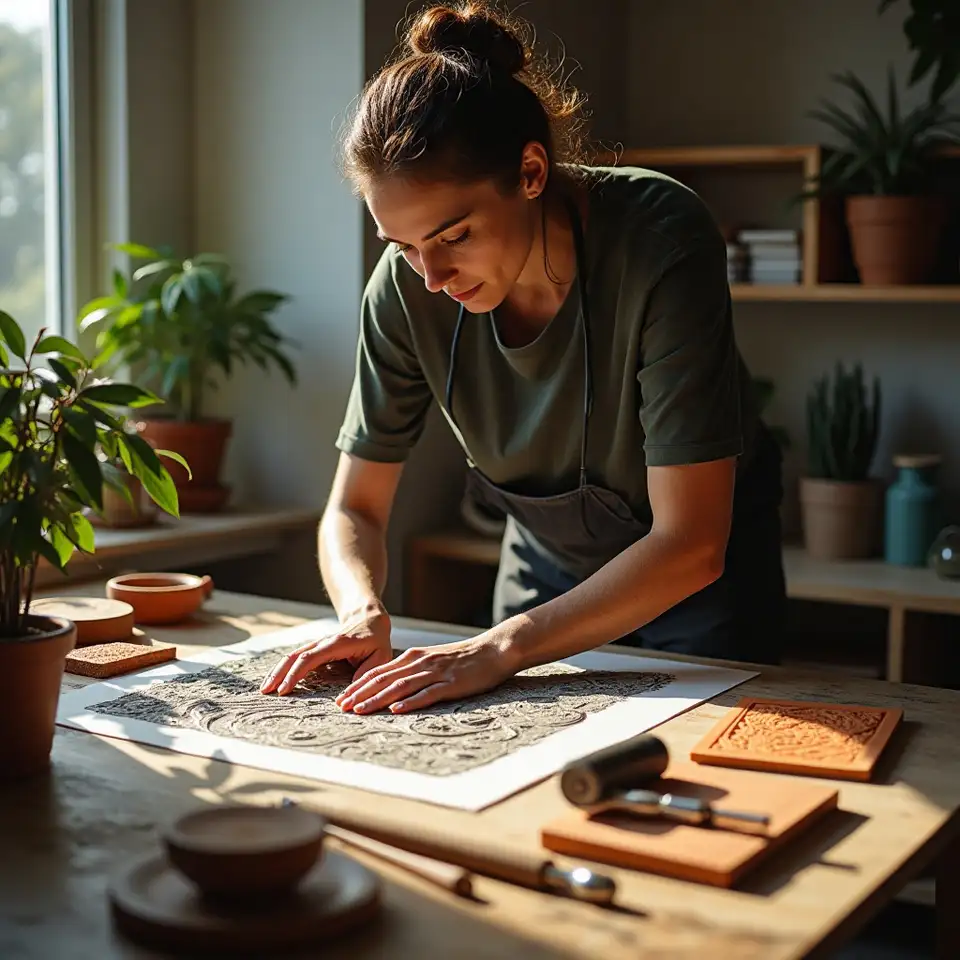
Ready to carve your first block?
Before digital printing, before offset lithography, before the photocopier — there was
the carved block. Ink pressed into a surface by hand, lifted by paper, and kept. That
process has not changed. What has changed is how easy it is to begin. You do not need a
press, a studio, or years of training. You need a block, a gouge, some ink, and the
willingness to start somewhere imperfect.
We have put together a getting-started pathway that takes you from your very first tool purchase through to pulling your first clean print. It is honest about the learning curve — there will be slipped gouges and uneven ink coverage — and practical about cost. Australian makers on a modest budget will find tool recommendations, ink comparisons, and step-by-step carving guides written by people who have made all the mistakes worth making. Start where you are, with what you have.